I have written a fair amount about the OG Queen of the 1970s “Outlaw” musical movement—a paradigm-shift that changed the way sequins & satin-saturated Nashville did business and how its head honchos dealt with artists who refused to fit Music Row’s assembly-line approach to creativity.

Though in hindsight Jessi Colter is far far FAR too often remembered as a figure akin to the mint on hubby Waylon Jennings’s pillow, the fact remains that Colter was, for a couple of crucial years, the more famous and more artistically acclaimed star. Long before either Jennings or Willie Nelson brought their Texas swagger to shake-up the staid Nashville establishment, Colter had been one of the few female songwriters to break into the big leagues, placing compositions on the recordings of legends like Don Gibson, Harlan Howard, Dottie West and, most famously, If He’d Love Me, on Nancy Sinatra’s These Boots Are Made for Walking album.
Colter, who was born and raised in the red-dirt Sonoran Desert of Arizona by a race-car builder/metal-mining father and Pentecostal preacher mother, even took her stage name from a great-great uncle, Jess Colter. Jess had been a counterfeiter with the Jesse James gang; therefore, our Jessi had been associating herself with “outlaw” imagery long before Waylon or Willie ever did. And her soulful, all-original music walked that renegade line before the boys did, as well.
Trained and playing piano in her mother’s church and at tent revivals throughout the West by age 11, Colter began writing her own songs and formed a local girl-band at age 12, influenced by blues, rock and roll, and her own poetic muse. Unknown to her mother, Colter’s older brothers would sneak her out of the bedroom window at 16 so she could play and sing in talent shows and audition for superstar Arizonans like Duane Eddy, who was on the lookout for a girl-singer to feature in his international touring act.
The comely Colter married Duane and, in a flash, was whisked from church revivals and her father’s 1,600 acre desert ranch/turquoise mine to the canyons of Beverly Hills, where she recorded singles for the Jamie label, wrote songs, and hobnobbed with best friends like Shelly Fabares and a bevy of late 1960s gurus, philosophers, and hippie explorers. After divorcing Eddy in 1969, she moved back to Arizona and met musical rascal Waylon Jennings. Romance and marriage ensued not long after the two performed together at the legendary JD’s roadhouse. Chet Atkins, who had placed many of Colter’s original songs with the above-mentioned artists, signed her to RCA and produced her self-written debut album in 1970.
It wasn’t until four years later, however, that Colter’s breakthrough would make her one of the biggest musical sensations of the period. Up to that point, she had shopped her songs to major labels that found her uncategorizable. “They felt I was neither country nor pop,” said Colter of that frustrating journey. Former Beatles stateside manager and record producer Ken Mansfield, however, took a four-song demo of Colter’s blues/funk/soul/pop-infused original tunes to Al Coury, the VP of Capitol Records at the legendary tower off Sunset Blvd. Blown away by what he heard, Coury signed Jessi Colter on-the-spot to the label’s pop division.
The rest is (unfortunately) oft-forgotten history. In January 1975, Colter’s groundbreaking Capitol debut album, I’m Jessi Colter, was released to critical raves from Billboard, Rolling Stone, and all other trade ‘zines. Moreover, the entire album was composed by Colter and Colter alone. Neither husband Jennings nor Willie Nelson had ever released albums written entirely by themselves. Of women signed to major labels in the same period, only Joni Mitchell could boast of writing an album in its entirety (1976’s Hejira) with no co-writers involved, and in Nashville, even the likes of stalwarts like Loretta Lynn and Dolly Parton were no longer writing their albums entirely by themselves.

The first single from the eclectic album was, in Colter’s opinion, an unlikely choice on the label’s part. I’m Not Lisa was and remains a haunting gothic piano ballad that told a tale as old as time: Get over your ex-lover. She’s gone but I’m here and plan to stay. Colter felt the song was slightly morose for a first single and would have preferred one of her uptempo funk-rock tunes, like Is There Any Way You’d Stay Forever or Come On In.
The American public, however, was mesmerized by I’m Not Lisa. With its almost ghostly piano intro and Colter’s spine-tingling, crystalline vocals, the song became a gargantuan international smash. Lisa soared to the No. 3 position on the pop charts, alongside Captain & Tennille’s Love Will Keep Us Together, America’s Sister Golden Hair, and Elton John’s Philadelphia Freedom. Moreover, the song hit the No. 1 spot on the Billboard Country Music Charts and steamrolled the Adult Contemporary Charts—a genuine “crossover,” multi-format behemoth. And the song refused to back down: I’m Not Lisa remained one of the ten longest-residing hit singles of 1975 on both Billboard and Cashbox Hot 100 and Country Lists.
Similar success awaited the album. I’m Jessi Colter soared up the Billboard Pop Albums Chart and hit No. 1 on the Country Chart, likewise remaining an almost year-long fixture on both lists—its persistent popularity prompting even notoriously fussy Village Voice rock critic, Robert Christgau, to admit that both single and album were genuine—and worthy—phenomena. Billboard’s top critic noted, “When she writes, she writes masterpieces. When she she interprets these songs herself, the result is superb.”

A household name almost overnight, the hazel-eyed beauty soon far overshadowed her husband in both the sales and the musical “name recognition” stratosphere, and before 1975 was over, she boasted a slew of major magazine covers and profiles, not to mention scoring two more Billboard Hot 100 singles—the anthemic What’s Happened to Blue Eyes and You Ain’t Never Been Loved (Like I’m Gonna Love You). A sold-out tour launched at the Santa Monica Civic Center and multiple guest appearances on red-hot showcases like The Midnight Special were followed by a now-famous package tour with Jennings, Tompall Glaser, and Jerry Jeff Walker—all artistic renegades and musicians of stirring caliber and originality. It was during this late 1975 tour that the “outlaws” moniker was first applied to this group of distinctive stars.

Capitol, for its part, was quick to follow-up Colter’s stratospheric year with a second album released in January 1976. Jessi, another collection of ten songs written entirely by Colter alone, proved as big a success as her Capitol debut, equaling the chart domination of her previous platter and, in the eyes of critics, even besting it as a creative masterpiece. Jessi was even more progressive album than I’m Jessi Colter, boasting original songs saturated with Colter’s now signature and uncompromising blend of funk/rock/pop and spiritual blues magic. On this occasion, Billboard raved, “With her first Capitol set she was so close to perfection the album was almost pristine, but it is with this stunning creation that Colter transcends all labels to become the true Mystic Lover glimpsed tantalizingly on her previous offering.”
Another big chart single hit followed with the gorgeously cinematic, psychedelic pop/rock of It’s Morning (And I Still Love You) while deep-cut tracks like The Hand that Rocks the Cradle and Rounder garnered heavy play on Album Oriented Rock radio stations across the nation. A slew of Grammy, CMA, and ACM nominations poured in for Jessi as Winter turned to Spring.
Like its predecessor, the Jessi album stayed high and long on the multi-format charts, but all of this superb momentum was about to skyrocket in an entirely different direction.
Jerry Bradley, the A&R chief at Waylon Jennings’s home, RCA Records, was miffed that ol’ Waylon was selling only a fraction of the records his wife was selling, and a fraction of the records his Texan buddy Willie Nelson was selling. True enough, by mid-1976, Jessi’s I’m Not Lisa single had sold 2 million copies and its host album, I’m Jessi Colter, had passed the million sales mark—and this before the RIAA had even launched its now-renowned “Platinum” certification award. Willie Nelson, too, had scored an unexpected triumph in 1975 when his Red Headed Stranger album had taken off out of nowhere and neared the million-mark in sales.
Said RCA’s Jerry Bradley of this moment in time, “Now, Rolling Stone magazine [critics] liked Willie and they liked Jessi, but they didn’t like Waylon. Waylon was selling 250,000 copies per album, if we were lucky. Meanwhile, Willie had sold a million albums over at Columbia. And Jessi put out I’m Jessi Colter over at Capitol and that damn thing sold a million. Lit a fire under our asses. And I remembered that we had archival material on both [Willie and Jessi]. I figured we’d use their stuff, whether they agreed or not, and maybe put Waylon’s picture a little bit higher on the cover, so he could sell a million copies, too. I also determined to hire Chet Flippo over at Rolling Stone to write the liner notes.” [Author’s Note: Though this is a quote from Jerry Bradley himself—one of many similar or almost identical remarks he made publicly about the history of the Wanted: The Outlaws album, and, without calling into question Mr. Bradley’s importance in the genesis of this project, LET IT BE KNOWN that Jessi Colter—who was obviously there for the entire wild ride—has gone on the record as stating that Jerry’s reminiscences might be a bit overstated. He was pivotal, indeed, but Jessi states without equivocation that this project was also a labor of love undertaken primarily by Waylon himself at RCA, from concept to design to spending hours in the vaults selecting songs and remastering, etc. Her words should be heeded every bit as much as Jerry’s when it comes to this historic album.]

This marketing ploy, of course, gave birth to the watershed album Wanted: The Outlaws—a savvy compilation of previously released RCA tracks by Waylon, Willie, and Jessi intended to boost Jennings’s musical profile and sales for the host label. It was a masterstroke of public relations genius, even if the songs had loitered in vaults or on prior, forgotten releases in the early 1970s. The only last-minute hitch was the consensus that there needed to be a fourth “outlaw” featured on the project. At the time of the compilation, Jennings was spending a great deal of his own creative (and consumptive) time in the company of Tompall Glaser. Though Tompall had scored a modest country hit single the year before with Put Another Log on the Fire, he was certainly not remotely in the same sales league as Colter and Willie Nelson. Neither could he compete with Jennings in the way that, say, a major star like Jerry Jeff Walker could and did achieve. Nevertheless, Jennings insisted upon Glaser’s inclusion, and RCA’s Jerry Bradley, already satisfied to have Jessi Colter and Willie Nelson to help launch the ship, acquiesced to the plan. (Glaser and his band of singing brothers were highly respected artists in Nashville, to be certain.)
At all events, musical history was made once again, for upon release in late Spring 1976, Wanted: The Outlaws became one of the most phenomenally successful albums of the entire decade and the most successful “country music” album of its era, by far. Colter’s contributions to the legendary platter consisted of her self-penned ballads, I’m Looking for Blue Eyes (a slightly more “countryfied” and pared-down alternate arrangement of her 1975 smash, What’s Happened to Blue Eyes), You Mean to Say, and a scorching duet with Waylon on the Elvis Presley nugget Suspicious Minds.
Released as one of the album’s two singles, Suspicious Minds flew to the No. 2 spot on the Billboard Country Chart, becoming yet another smash for Colter, a new smash for Jennings, and one of the biggest hits of the year. The album itself captured the imagination of the American public to such an extent that it stormed into the Top 10 of the Billboard Pop Albums Chart, increasing the fame of all four artists involved. Looking back on the phenomenon, Colter said, “They couldn’t find men fast enough to press those records in the factory.”
The most successful package “country music” tour of the 1970s ensued, with all four artists showcased, coast to coast and everywhere in between.
“We were artists working our craft,” Colter reminisced, “and there was no time to slow down.”
Colter did find the time, however, to record and release a third Capitol album in late 1976. The lush, rock/jazz/bluesy Diamond in the Rough shot straight to No. 1 on the country charts and, once again, into the upper reaches of the Billboard Pop Album Charts. Critical accolades continued to accompany the lift-off. Everything the lady touched turned to gold—and platinum: by years end, all of the so-called “outlaws” were holding their newly minted award discs for Wanted. ACM awards for Album of the Year followed suit.
It was around this period, after two full years of meteoric success, that the Jennings-Colter marriage began to feel the strain of having not one but two major stars living together at home, traveling together on the brutal road, and … competing with each other in the marketplace. That, too, is another tale possibly as old as time (and likely a good premise for a song) but for anyone unfamiliar with that specific pressure as it plays out in the realm of fame and fortune, cf. James Taylor and Carly Simon or virtually anyone in Fleetwood Mac, along with plenty of others.
Jennings and Colter separated for several months and Colter felt it was time to put down permanent roots in Nashville, whether Jennings was going to remain in the picture or not. She looked at houses while on a break from touring and decided upon a beautiful mansion in the Brentwood suburb. It was at that time that Jennings came calling again. He had heard through the grapevine that Jessi was interested in a house. He was interested, too, but lamented that, unfortunately (and almost unbelievably) he was broke. After all of the new success, it must be remembered that Jennings suffered at the time from serious—and expensive—addiction issues and had not been the best manager of his money. If anyone suffered for his art, Waylon Jennings’s complicated relationship with “chasing the song” exemplifies the anguish of a good-spirited creative force fighting constantly to create … and using what methods were at hand to do so, for benefit or for ill.
Luckily, as Colter recounted in her excellent 2017 autobiography, An Outlaw and a Lady, the two artists had maintained completely separate bank accounts from the beginning of their marriage. Worth well over a million on her own by the time, with more money rolling in fast and faithfully, Colter recalled, “Waylon may have had cash flow problems, but my royalties were sitting in the bank.”
Jessi bought their beloved mansion, dubbed “Southern Comfort,” and one of the most famous marriages in music history was destined to survive.
Sadly, the same could not be said for Colter’s A-List musical career, along with the stellar and exciting critical reputation she had garnered over two years of relentless work. Two problems were made manifest at different times, it would seem, and in different ways. For starters, amid the astonishing success of the mid-‘70s and publishing rights to a musical catalogue of dozens of self-written songs that would earn her a comfortable living for a lifetime, Colter had found the slings and arrows of the music industry to be detrimental to her spiritual health. Rediscovering the positive, cheerful faith of her youth—an uplifting brand of Christian belief implanted by her beloved mother’s wise approach to devotion—Colter decided to take a brief detour from the country-rock/funk-pop pathway she had forged so successfully and record an album of ten gorgeous, entirely self-written folk-rock Gospel tracks she had been sitting on for years.
Capitol records execs agreed that the music was beautiful “Jessi Colter music” but they were not at all supportive of her idea to release so stark a spiritual album when she had conquered pop, rock, and country territories so reliably. A sudden shift, they warned, could damage her momentum in the eyes and ears of her broad record-buying public. Colter, however, insisted, motivated by faith and the dedication of the album to her recently deceased mother. With reluctance, Capitol went ahead with the release of the stunning—but thematically offbeat— Mirriam.

As Waylon recalled in a late 1990’s interview: “Jessi had sold millions of records for Capitol and she wanted to put out this one album for her mama, and the label didn’t want it. To punish her they buried it and refused to promote it. It broke her heart. She never had much interest in the industry or much love for it after that.”
Mirriam —the resplendent musical tour de force of soul and spirit and gratitude—failed to find Colter’s usual audience, buried as it was by a possibly (not by any means assuredly) prejudiced new marketing director at the label, and the fallout from what Colter must have seen as Capitol’s betrayal was irrevocable. There seems little doubt that she could have recovered fairly quickly with another, more mainstream set of self-penned Jessi Colter songs, but Jennings’s remark that her interest in the industry waned considerably after the commercial disappointment of her spiritual album should not be underestimated.
In late 1978, Colter—the irrepressible writer and mystic poetess—released an album of lovely but sometimes uneven cowboy songs written by other respected names like JJ Cale, Neil Young, Johnny Cash, and Tony Joe White, among others. The broader pop/rock audience she had acquired ignored the album, and, speaking from direct experience, the cover alone may have turned off a huge portion of Colter’s female fans, at that juncture. Case and point, my mother and father had been big fans of Jessi Colter (no Waylon Jennings records were in the house—I would learn to love Waylon much later) for they favored artists who wrote and played on their own songs, especially with an element of mystique: Simon and Garfunkle, Gordon Lightfoot, James Taylor, Leon Russell, and, yes indeed, Jessi Colter. But when my mother ordered That’s the Way A Cowboy Rocks and Rolls from Columbia House Records Club in 1978, she took one look at the cover and frowned.
“Ha ha. Oh my, I guess I won’t be showing this to your father,” she said, with a genuinely conspiratorial laugh. And then she studied the cover for a minute more before saying, “This is a bit much for her.” At the time, I didn’t know what that meant. She never even opened the album; she gave it to me and let me listen to it on my little record player. I liked it, but not as much the prior Jessi records I had grown-up with. The cover … well, I was precocious but still only 10.

Looking back, my Mom’s reaction makes me a trifle annoyed, but I have to “check my anachronisms” in this case. There was never any question of Jessi Colter’s physical beauty, but Capitol (and famed art director Roy Kohara —“famous Farrah poster,” anyone?) had always showcased Jessi’s physical beauty with a distinct ambience of mystery and even graceful solemnity. She was visually beautiful, but also an “idea,” a being within a swiftly captured photograph, a glimpse of light and earth as if seen in a painting, all of which reflected both loveliness and the earthy, natural poetry of her song-craft. This album cover seems tame, perhaps, compared to the displays and casual calibrations of the contemporary music star’s image, but in 1978, I do believe it was another, potentially cynical and possibly misogynistic betrayal by Capitol. What were the conversations cooked-up by the marketing department to arrive at this cover?
“Throw her in a fake wigwam, toss a few pillows around, and make it look like she’s about to drop her top.”
Make no mistake: in the opinion of this writer, Jessi Colter has always been a stunner without even trying, but I watched my mother’s lip curl at first sight of this brazen cover and my mother was a very good-looking woman herself. She did not feel threatened by other good-looking women. Her remark about my Dad was genuinely a joke. But she stopped taking Jessi Colter seriously after seeing that cover. After several years of devoted attention, Mom never listened to Jessi again … not until I sent her the shattering, genius-work Out of the Ashes decades later in 2006, which thrilled her to no end.
I do wonder if the one-two punch of Mirriam being an unfairly overlooked hidden gem in 1977, combined with this 360-degree turnabout in both visual image and conceptual musical departure cost Jessi a gargantuan portion of her sympathetic, diverse female audience. In my view, Jessi’s prettier and sexier than Tanya Tucker and Dolly Parton and Carly Simon, but fans of all stripes never needed to be “told” that Jessi was a babe. That wasn’t her image. The above-mentioned, gifted women embraced and utilized that sexual component with their own powers. Jessi was the mysterious, impossibly lovely girl-poet, the alluring Siren in the woods, seen only in a bit of shadow or at a thoughtful angle. And classy.
The cover songs were fine and she sang beautifully on this album (Black Haired Boy, Susannah Clark’s I Was Kinda Crazy Then, and Jessi’s hypnotizingly Paradisiac rendering of Fritz & Oldham’s My Goodness) but who in God’s name, who had been a true fan of Jessi Colter’s four previous masterpieces, would want to hear her sing a lyric like “… drivin’ pick-up trucks and dippin’ Skoal/that’s the way a cowboy rocks and rolls.”
I think this album may have cost her career more than the unexpected-but-brilliant Mirriam, in terms of critics and rear-view mirror “thinkers” no longer taking Jessi Colter seriously. Certainly, this transient attitude was helped by the decline in Waylon’s health, which was being invasively thrashed by the press. Reprehensible? You bet. Today, artists suffering from severe addictions are coddled and and “affirmed” (even as the press and social media continue to invade privacy!) but no such mercy was shown to Waylon. My other thought is: maybe Jessi really wasn’t that concerned, at that juncture. She clearly wasn’t writing new material at the time and was justifiably disgusted with Capitol’s treatment of her achingly excellent spiritual suite. I still listen to select songs on the Cowboy record—her first four Capitol efforts, along with Out of the Ashes and The Psalms, I never fail to enjoy from start to finish.
Whatever was really going on with Colter’s career at that juncture, all things took a much-needed back seat because in 1979 she gave birth to her and Jennings’s first child, Shooter, and the role of mother and caretaker of the increasingly ill and erratic Jennings likewise took precedence over any musical aspirations.
A tremendous, slightly strange rebound in the marketplace occurred for Jessi in 1981 when RCA paired her with Waylon in a collaborative album, much as it had done with Waylon and Willie a few years earlier. Leather and Lace was a great success, spawning two big country hits for Jessi with her self-penned standard Storms Never Last and a spritely cover of Wild Side of Life. The album went gold quickly, but this success essentially marked the end of Colter’s mainstream career as a recording artist for almost three decades. I didn’t care for the album and still don’t. I think Jessi’s original recording of Storms Never Last as the redemptive, all-radiant, bittersweet coda on I’m Jessi Colter is the definitive rendition of the song. I know everyone from Dr. Hook to Miranda Lambert to Shelby Lynne and Allison Moorer have covered it beautifully, but Jessi sang it like a hymn of hope crossing the freakin’ Jordan on her album and nothing touches it, not even close. Jessi’s piano, her perfect delivery, the glorious geniuses accompanying her (Ralph Mooney, Richie Albright, etc.) I spoke with her producer, Ken Mansfield, once and he lamented that Capitol did not release the radio edit of Storms Never Last as a single.
“It would have been still another million-seller for her. I know it like I know my own name,” he said. “And it would have gone to No. 1 on pop, country, adult contemporary, you name it. Bigger than I’m Not Lisa and What’s Happened to Blue Eyes because that song hits every human in the heart, but only one person knows what it means, and that’s Jessi. And that’s the way she sang it.”
“Why in the hell didn’t they release it, then?” I asked.
“Oh, some girl whose name I forget covered it as soon as Jessi published it and, sorry, it was awful compared to Jessi, but anything would be. And this girl’s barely scraped the country Top 20. Just a generic effort. I wanted Capitol to release Jessi’s, it would have blown everything up, but [Capitol] felt they’d made enough from her on singles that year and they wanted the money they knew would pour in from her next album. Jessi’s sessions and release dates were on a strict timetable, no deviations. They knew she would sell half a million albums once the second one was released, no matter what was on the album, and she did sell that, and they wanted album money. They got it.”
Hmmpfff!
On Leather and Lace, Jessi and Waylon put on a brave face, but it was a lackluster album and many critics noted exactly that. The highlight was Jessi’s self-penned ballad I Believe You Can, an impassioned, striking piece of art that ranks with her best work. By that time she was also collaborating with a partner, Basil McDavid, but the results were mind-boggling, at least to me. Jessi’s other solo tune on that extremely well-packaged, big-selling (but forgettable) album was a co-written tune called Rainy Seasons. In my estimation it represented (and still represents) a nadir for Colter’s artistry. It’s the only awful song I have heard from her oeuvre. As on most of the rest of the album, Jessi and Waylon sounded physically exhausted, spent, uninspired, and drab. Waylon, with his golden baritone, sounded utterly asleep, except for a rousing bit of verve on Shine. Jessi seemed to squeak her vocals (except on the aforementioned masterwork I Believe You Can) and sounds generally cowed, afraid of her own voice. Waylon even mumbled-out a guy-rendition of Jessi’s What’s Happened to Blue Eyes. Unfortunate.
But those interested in the trajectories of two of the most important artists of any musical movement of the 1970s must, at this point, wrap their frontal lobes around all that these two achieved in a relatively compact amount of time: becoming superstars (or at least blazing comets) on competing labels, writing material full-time, performing under brutal scheduling conditions and demands, fighting with labels for their freedom of artistic expression, and then doing it all over again the following year while maintaining a marriage and, in Waylon’s case, battling addictions that he cultivated primarily so that he could work more and create more. That was his greatest desire. He was also (by his own reports and allegedly according to a son and many others) a cheating, no-good, downright adulterer against Jessi, against his marriage.
But these two stubborn souls loved each other and, I have a suspicion, they were—above all—artistic and spirit-soulmates as much as they were “married lovers” and sometimes the strongest foundations of all are built upon a kindred spiritedness that runs deeper than sex or money or kids or chart positions.
In looking at Colter’s career trajectory, it is crucial to pay attention to the high points of stress in the marriage, and how both were fighting to keep heads and careers above-water at key junctures to simply survive to the next day, week, month, gig, album, year.
Jessi Colter is modest almost to the point of incredulity, at times. It is a curious thing. In some cases, she seems to downplay her artistry or dismiss her genuine fame as if these things were completely happenstance, as if she had not been a singer, songwriter, and artist honing her craft long before meeting Jennings, long before the breathtaking success of I’m Not Lisa, What’s Happened to Blue Eyes, You Ain’t Never Been Loved, Storms Never Last, It’s Morning and I Still Love You, Suspicious Minds, and a string of mega-selling albums packed with self-written gems.
I think it is crucial to understand that Jessi Colter is a woman of mighty faith and genius-level creativity (I love much of Waylon’s music, but quite honestly, I think Jessi Colter is/was the greater talent in that awesome equation, only people have been lulled into forgetting that over the years. Why? Because I truly do believe that when a woman equals the “boys” in any industry, she is celebrated, as is proper, but she is also held to a higher standard of production and accomplishment. If a woman—especially one connected to country music—reaches a level of fame that overshadows her man, the misogyny “dynamic” flies off the charts, even largely unexpressed or unspoken.
Peruse early interviews with Colter and Waylon when Colter skyrocketed to widespread international pop fame … not just “Country”. There are numerous accounts of Waylon being teased and taunted by Nashville boys and morons asking, “Hey! You’ve been struggling for years and now your wife’s a bigger star than you ever dreamed of being.”
To his credit, Waylon would reply along the lines of, “Well, that may be, but I don’t give a shit because I happen to be a fucking legend.”
Defensive words, and witty ones—even if Waylon wasn’t anywhere near a legend when Jessi Colter went to the top of the national (and several international English-speaking nation’s) popular charts. A multi-million selling song on the Top 4 of the US Pop chart in the ‘70s was the equal of possibly twenty or thirty No. 1 Conway Twitty hits that besotted the country charts and went nowhere else. Particularly given the strange, political, and Byzantine manner in which different chart rankings were tallied in the 1970s (etc.) the fact that “unknown” Colter’s song flew to the top of the pop survey and stayed entrenched for nine months indicates that it was a monster hit, indeed. It’s attainment of the No. 1 slot on the Country Chart (while crucial) is nothing compared to its performance as one of the four biggest, bestselling hits in the leading nation on the globe and beyond.
Was Waylon jealous? Oh, please. He would not have been human if he weren’t. And how would a jealous man possibly take out his jealousy on a staggeringly sexy, suddenly superstar wife?
Gee, HOW?
My point is this: these two vastly different but desperately soul-bound humans found a way to love and live with each other, to forgive (a lot on Jessi’s part) but also on Waylon’s. In her outstanding autobiography, Jessi admits that, when she once more embraced the Christian spiritual values of her youth, she became—like many—a tad “preachy.” Waylon told her to lay off—he knew he was a fuck-up but had his own beliefs and wasn’t certain. I can only imagine that Jessi’s pestering was both a reflection of her sincere joy at reclaiming a lost Light and a way to zap-zap-zap her runaround hubby. (I’ve lived it. I watched my parents go through the same thing. The resulting dots are not difficult to connect.)
Jennings is brutally, bluntly honest in his interviews. He could afford to be so. He was a guy. In the realm of the mundane or the realm of stardom, women almost always have FAR more ‘splaining to do, so they soften the edges and evade.
I believe that, looking at Jessi Colter’s entire career and life with Waylon, we are looking at a woman who was deeply, horribly, shatteringly wounded, but one whose faith (and personal success, secondarily) carried her through the years on a broken wing. She tells it all on her masterpiece Out of the Ashes album, from 2006. The message is unmistakable. But she won’t admit or state that she was/is a “victim.” She has persevered and remained a force. But no one can tell me that Jessi Colter was not an abused woman, wife. I don’t believe that Waylon ever raised a hand to her, but some forms of abuse leave deeper scars than others, and for all the admiration I harbor for Jessi Colter the genius artist, there is no way on earth that she will make me believe that Jennings’s antics and addictions and adulterous exploits did not seriously affect the trajectory of her brilliant career or scar her deeply. Preposterous mythology.
But many people need myths to sustain the daily fight. My great thrill, as a fan, and fellow artist (most assuredly) is that both of them fought for the most important goals—each other, whatever their mistakes. They ran the race, as Jessi will know from the book of Hebrews, before the cloud of witnesses, and both won. I admire them deeply. And, yes, especially Jessi.
After the success of Leather and Lace, Jessi began to focus more upon her husband’s painful but ultimately triumphant recovery from addiction, and the raising of their talented son. She continued to tour as a featured guest with Jennings for twenty five years until Jennings’s health issues mandated a retirement. After his all-too-early death in 2002, Colter returned in 2006 with a stunning, self-penned album produced by Don Was. Out of the Ashes was crafted—just as in her Capitol heyday—with the best artists in the business (Ralph Mooney, Richie Albright, Carter & Barney Robertson) and Jessi made the Billboard Charts once again, ending-up on a number of influential “Years Best Albums” lists, including the Top 10 of Nashville Scene. In 2017, Colter released another ground-breaking and well-received album with the psychedelic, world-trippy The Psalms, produced by Patti Smith Band’s brilliant Lenny Kaye.
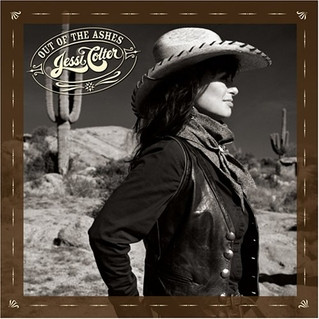
Amid these projects, a tremendous renaissance of interest has been taking place in Nashville and elsewhere as Colter’s back catalogue of classic Capitol albums has become available for streaming. In addition to being rediscovered, she is also reclaiming the magnitude of her direct influence upon today’s crop of pioneering female singers and songwriters on Music Row, dozens of whom cite her as a powerful inspiration.
Two nights ago, at age 79, still looking lovely, and still singing with amazing command, Jessi Colter received a standing ovation at Nashville’s Ryman Auditorium, the “mother church” of country music, starring as the special featured guest of Margo Price, at the climax of the latter’s spectacularly received ‘Til the Wheels Fall Off Tour. Two days later, it was announced that Jessi’s brand new, self-penned country-rock album, Edge of Forever, will be released in September on Appalachia Record Co. Produced by the same, exceedingly gifted Margo Price, the release of the album has been long-awaited and expectations are high for the OG Lady Outlaw. Let’s see some Grammy action. Jessi Colter is quite overdue.*
(If June Carter Cash could garner a late-in-life Grammy, Jessi Colter had better garner at least four, damn it.)
*Jessi Colter is indeed the recipient of the Grammy Hall of Fame Award for her crucial contributions to Wanted: The Outlaws
_______________
#JessiColter #MargoPrice #EdgeOfForever #AppalachiaRecordCo #WaylonJennings #Outlaws #LadyOutlaw #RymanAuditorium #StanningForJessi #Legacy #ShooterJennings #WillieNelson #AuthorJonathanKieran #JonathanKieran #WriterJonathanKieran #CaliforniaLife #OnTheEdge #Wistwood #JonathanKieranTheAuthor #JonathanKieranMusic #JonathanKieranNewAlbum #JonathanKieranArtist #Jericho #JonathanKieranJericho #JerichoAlbum #WritersOfInstagram #ArtistsOfInstagram
 Jonathan Kieran
Leave a comment